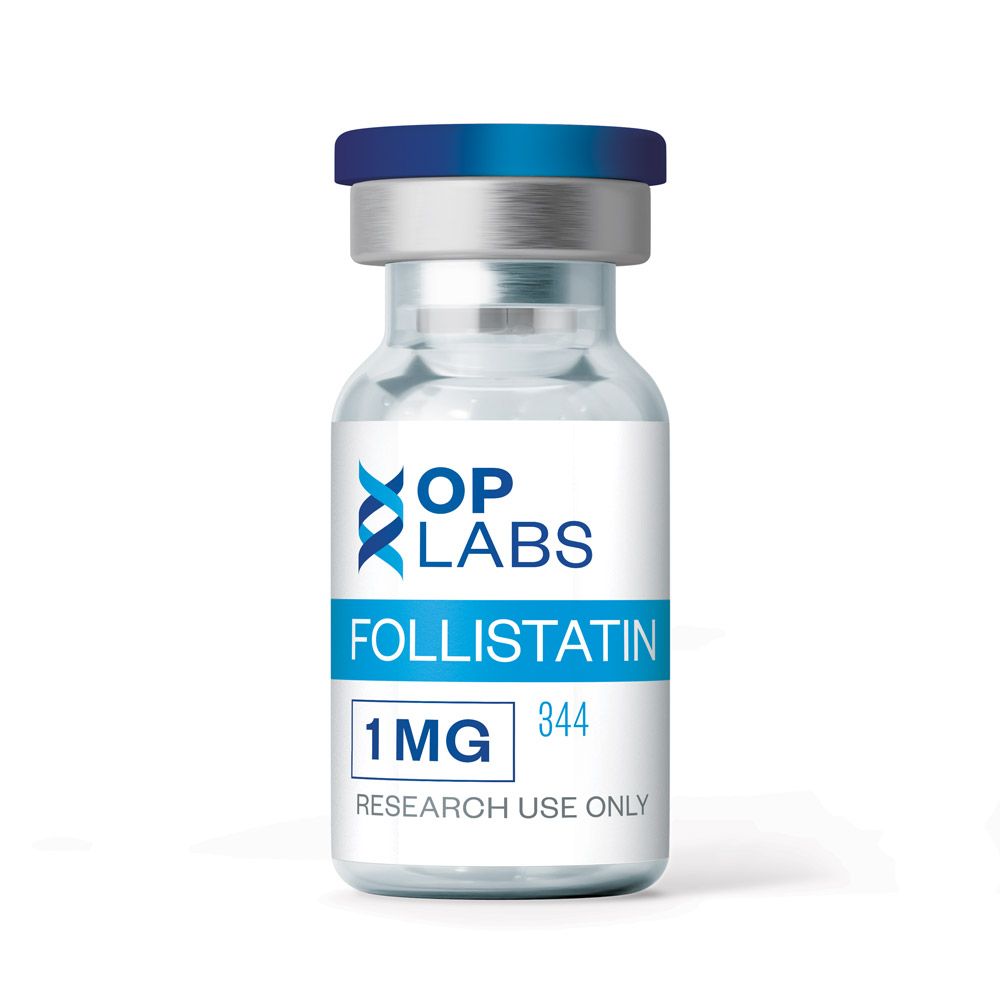
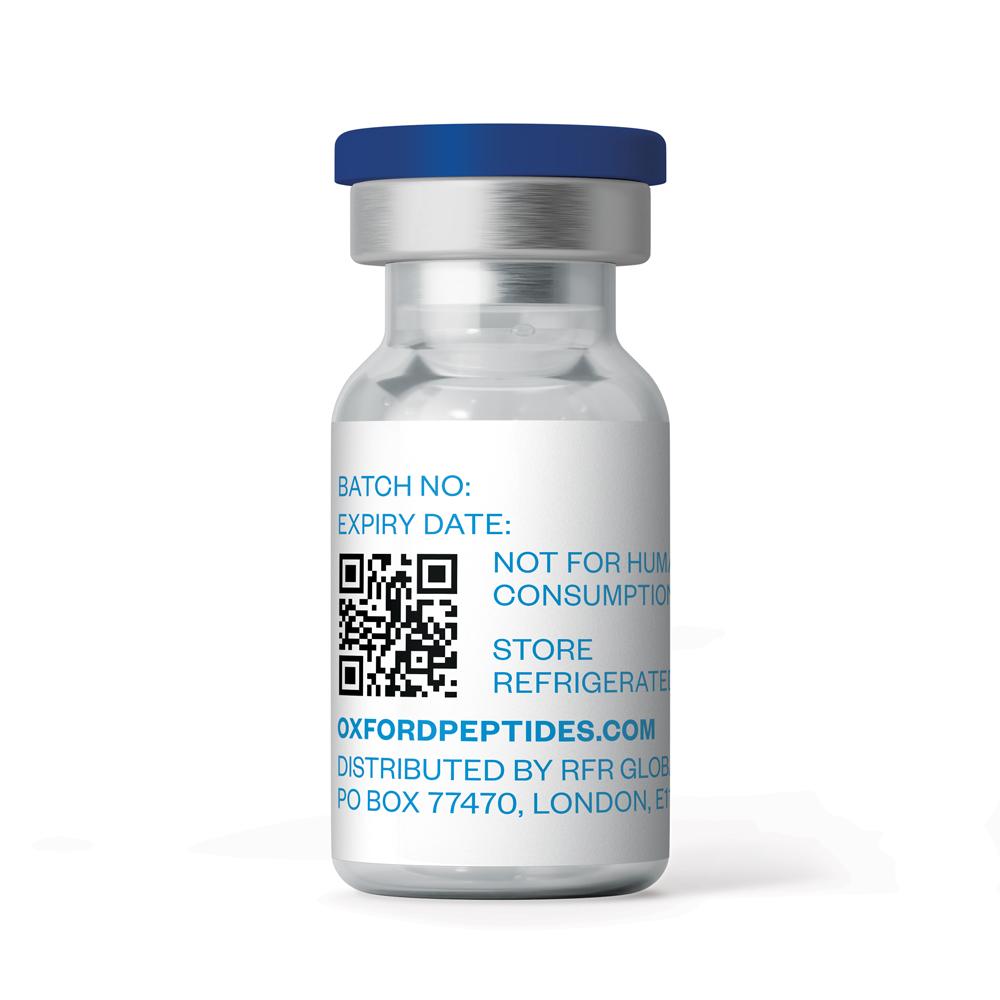



- OP Labs formerly Oxford Peptides.
- Batch HPLC tested at 99%+ purity.
- Store frozen long term or in fridge when ready to be used.
- Sold for research purposes only.
- Contact us for Wholesale Orders.
Download COA here: Follistatin344_1mg.pdf
Please note if you have a different Batch ID please contact us for the latest COA.
Follistatin-344
Synonyms / Designations: Follistatin 344, FS344, FST-344, activin-binding protein (research designation)
CAS Number: N/A
Molecular Formula: N/A recombinant protein)
Molar Weight: 3780.0g/mol
Purity: ≥ 95 % (HPLC, typical)
Appearance: White to off-white lyophilised powder
Pack Size: 1 mg (total)
Storage: Desiccated, protected from light, stored at –20 °C or below
Solubility: Soluble in water and buffered aqueous solutions (e.g. PBS)
Description & Mechanism
Follistatin 344 is a full-length, naturally occurring glycoprotein that functions as a high-affinity binding protein for select members of the transforming growth factor-β (TGF-β) superfamily, most notably activins and myostatin. In biochemical and cellular research systems, Follistatin 344 modulates growth factor signalling by directly binding these ligands, thereby preventing their interaction with cognate receptors and downstream signal transduction.
Activins and myostatin are secreted growth factors involved in the regulation of cellular growth, differentiation, and tissue homeostasis. Through ligand sequestration, Follistatin 344 serves as an endogenous regulator of these pathways and is widely studied as a molecular tool for investigating TGF-β-related signalling dynamics in vitro and in vivo.
In preclinical research settings, exposure to Follistatin 344 results in altered activin- and myostatin-mediated signalling, with downstream effects on SMAD phosphorylation, transcriptional regulation, and cellular phenotype depending on the experimental model employed.
- As a molecular probe to study activin and myostatin function, regulation, and receptor-ligand interactions.
- To investigate TGF-β superfamily signalling pathways involved in cellular growth, differentiation, and development.
- In cell-based assays examining downstream SMAD signalling, transcriptional responses, or growth factor modulation.
- In animal or ex vivo experimental models for mechanistic investigation of growth factor regulation and tissue signalling processes
Specifications Summary
| Parameter | Typical Value / Range |
|---|---|
| Purity (HPLC) | ≥ 99 |
| Appearance | Off-white to pale yellow powder |
| Molecular Weight | 3780.0g/mol |
| Protein Type | Recombinant glycoprotein |
| Solubility | Water, dilute acids, DMSO |
| Storage | –20 °C, desiccated, dark |
| Pack Size | 3,000 mg (bulk) |
Handling, Reconstitution & Stability
- Weigh under inert/dry conditions; avoid moisture uptake.
- For stock solutions, dissolve in water or dilute acid (e.g. 0.1 N HCl) or compatible solvent (e.g. DMSO) depending on assay needs.
- Filter sterilize if needed (e.g. 0.22 µm) immediately prior to use.
- Aliquot and store stock solutions at –20 °C (or lower) to avoid repeated freeze–thaw.
- Monitor for precipitation or pH shifts before use in sensitive assays.
Precautions & Notes
- Because 5-Amino-1MQ is a small molecule inhibitor with ionic character, buffer composition, ionic strength, and pH in assays may influence its behavior (ion pairing, binding).
- It is advisable to run appropriate controls (vehicle, dose–response) to exclude non-specific effects in in vitro systems.
- For in vivo or ex vivo studies (if employed in nonclinical contexts), consider potential biodistribution, clearance, and off-target interactions in experimental design.
- Use of light, high temperature, or prolonged aqueous exposure may degrade or oxidize the compound; prepare fresh or store stocks under protective conditions.
References
Amthor H. et al. Follistatin complexes myostatin and antagonises myostatin-mediated inhibition of myogenesis. Developmental Biology, 2004.
https://pubmed.ncbi.nlm.nih.gov/15136138/
Lee S.J. et al. Quadrupling muscle mass in mice by targeting TGF-beta signaling pathways. PLoS One, 2007.
https://pubmed.ncbi.nlm.nih.gov/17726519/
Schneyer A.L. et al. Differential binding and neutralization of activins A and B by follistatin and follistatin-like-3 (FSTL3/FSRP). Endocrinology, 2003.
https://pubmed.ncbi.nlm.nih.gov/12727715/
Gilson H. et al. Follistatin induces muscle hypertrophy through satellite cell proliferation and inhibition of both myostatin and activin. American Journal of Physiology – Endocrinology and Metabolism, 2009.
https://journals.physiology.org/doi/full/10.1152/ajpendo.00193.2009
Keywords: Follistatin-344