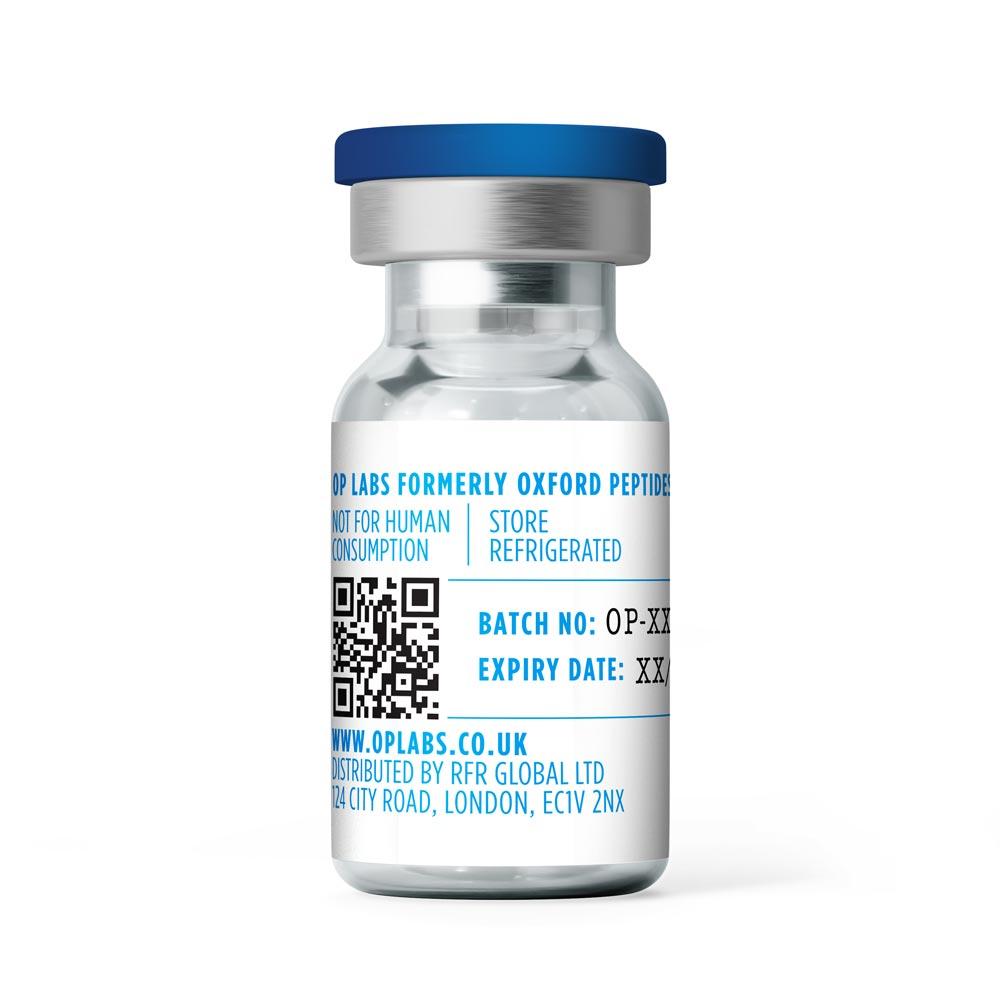


- OP Labs formerly Oxford Peptides
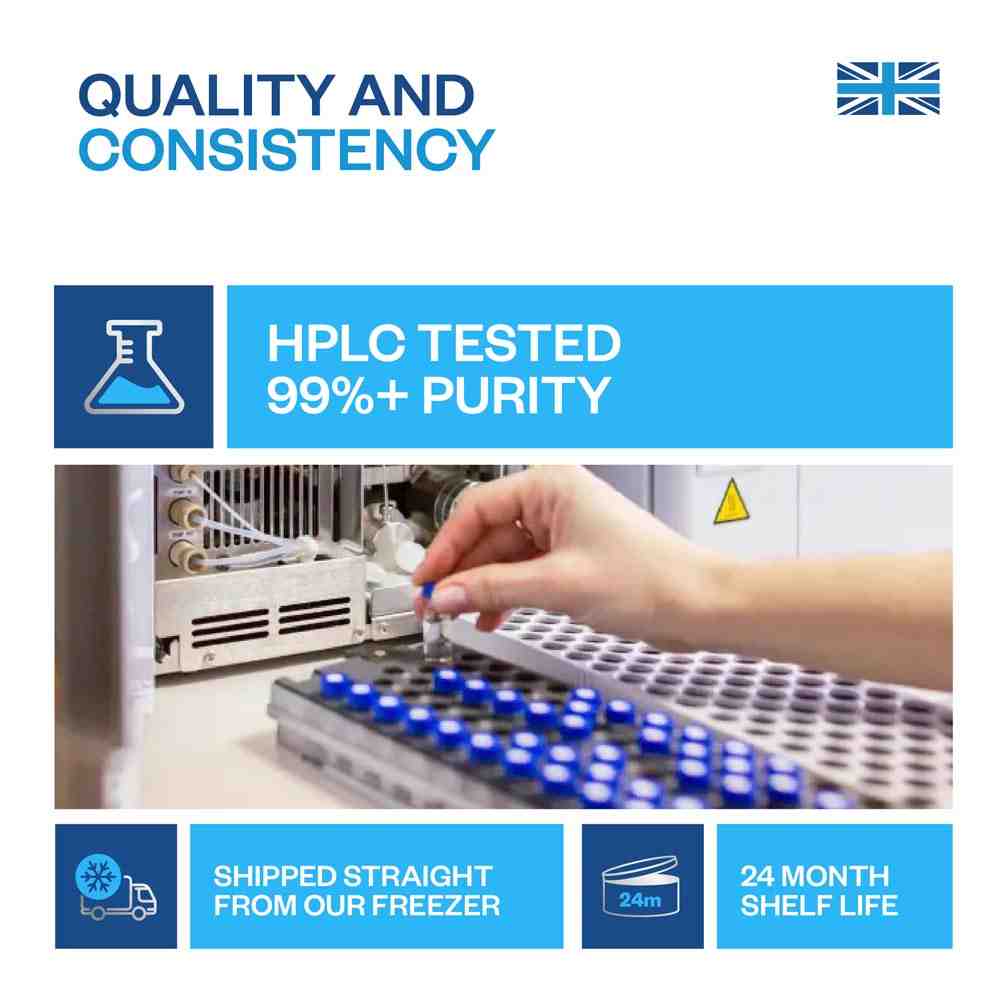
- Batch HPLC tested at 99%+ purity
- Store frozen long term or in fridge when ready to be used
- Sold for research purposes only
- Contact us for Wholesale Orders
Download COA here: Hexarelin_COA.pdf
Please note: if you have a different Batch ID, please contact us for the latest COA.
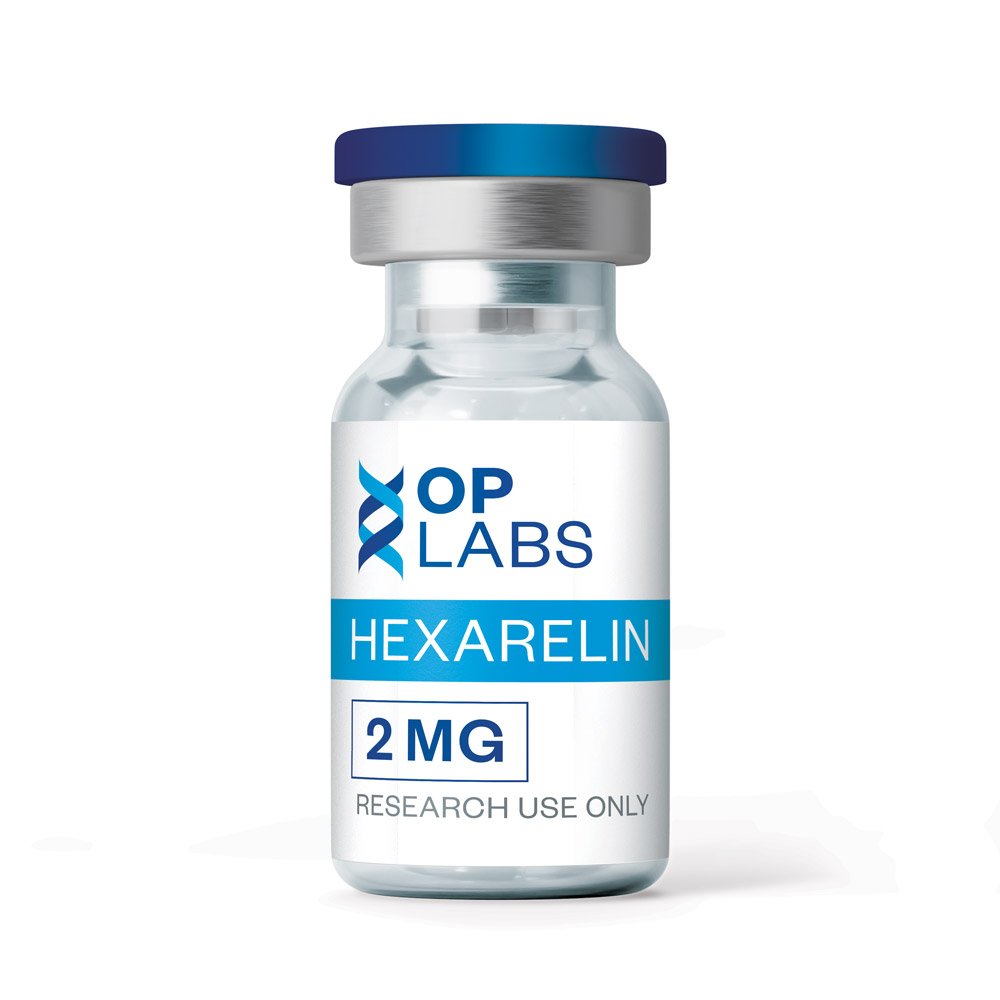
Hexarelin
Synonyms / Designations: Hexarelin, Examorelin, Growth Hormone–Releasing Peptide-6 analogue, GHRP-6 analogue
CAS Number: 140703-51-1
Molecular Formula: C47H58N12O
Molecular Weight: ~887.04 g/mol
Peptide Classification: Synthetic hexapeptide; growth hormone secretagogue analogue
Purity: ≥ 99 % (HPLC, typical)
Appearance: White to off-white lyophilised powder
Pack Size: 2 mg (total)
Storage: Desiccated, protected from light, stored at –20 °C
Solubility: Soluble in sterile water and buffered aqueous solutions
Description & Mechanism
Hexarelin is a synthetic hexapeptide belonging to the growth hormone–releasing peptide (GHRP) family. It was developed as a structurally defined analogue for research into peptide-mediated signalling associated with growth hormone secretagogue pathways.
In biochemical and cellular research systems, Hexarelin has been shown to interact with the growth hormone secretagogue receptor (GHS-R1a), initiating intracellular signalling processes relevant to neuroendocrine regulation. Experimental studies typically examine receptor binding characteristics, signal transduction mechanisms, and comparative behaviour relative to other GHRP compounds. Observed molecular responses are dependent on experimental design, concentration, and model system, and are used to investigate receptor-mediated signalling rather than defined physiological outcomes.
Applications in Research
- As a molecular probe for studying GHS-R1a receptor binding and activation
- Investigation of growth hormone secretagogue–related signalling pathways
- In vitro studies examining peptide–receptor interactions and intracellular signalling
- Use as a reference compound in neuroendocrine and peptide signalling research
Handling, Reconstitution & Stability
- Weigh under dry conditions; peptide is hygroscopic
- Reconstitute in sterile water or appropriate buffered aqueous solution depending on assay requirements
- Avoid vigorous agitation during dissolution
- Filter sterilize if required (e.g. 0.22 µm) immediately prior to use
- Aliquot and store reconstituted solutions at –20 °C (or lower) to minimise degradation
- Avoid repeated freeze–thaw cycles
Specifications Summary
| Parameter | Typical Value / Range |
|---|---|
| Purity (HPLC) | ≥ 99 % |
| Appearance | White to off-white lyophilised powder |
| Molecular Weight | ~887.04 g/mol |
| Peptide Type | Synthetic GHRP analogue |
| Solubility | Water, buffered aqueous solutions |
| Storage | –20 °C, desiccated, dark |
| Pack Size | 2 mg |
Precautions & Notes
- Experimental behaviour of Hexarelin is influenced by receptor expression, concentration, and exposure duration
- GHRP analogues may exhibit signalling profiles distinct from related peptides
- Buffer composition, pH, and ionic strength may affect peptide stability and assay performance
- Appropriate controls are recommended to distinguish specific from non-specific effects
- Intended strictly for laboratory research use; not for human or veterinary application
References
Bowers C.Y. et al. On the actions of the growth hormone-releasing hexapeptide, GHRP. Endocrinology, 1991.
https://pubmed.ncbi.nlm.nih.gov/1899536/
Ghigo E. et al. Growth hormone-releasing activity of hexarelin, a new synthetic hexapeptide, after intravenous, subcutaneous, intranasal, and oral administration in man. Journal of Clinical Endocrinology & Metabolism, 1994.
https://pubmed.ncbi.nlm.nih.gov/8175959/
Howard A.D. et al. A receptor in pituitary and hypothalamus that functions in growth hormone release. Science, 1996.
https://pubmed.ncbi.nlm.nih.gov/8700211/
Muccioli G. et al. Growth hormone-releasing peptides and the cardiovascular system. Annals of Endocrinology, 2000.
https://pubmed.ncbi.nlm.nih.gov/10867995/
Locatelli V. et al. Hexarelin, a potent GHRP analogue: interactions with GHRH and clonidine in young and aged dogs. Peptides, 1994.
https://pubmed.ncbi.nlm.nih.gov/7854991/
Rossoni G. et al. Cardioprotective effects of hexarelin in the rat. Cardiovascular Research, 1999.
https://pubmed.ncbi.nlm.nih.gov/10536951/
Keywords: Hexarelin, Examorelin, GHRP, Growth Hormone Secretagogue Analogue, Synthetic Peptide