- OP Labs formerly Oxford Peptides
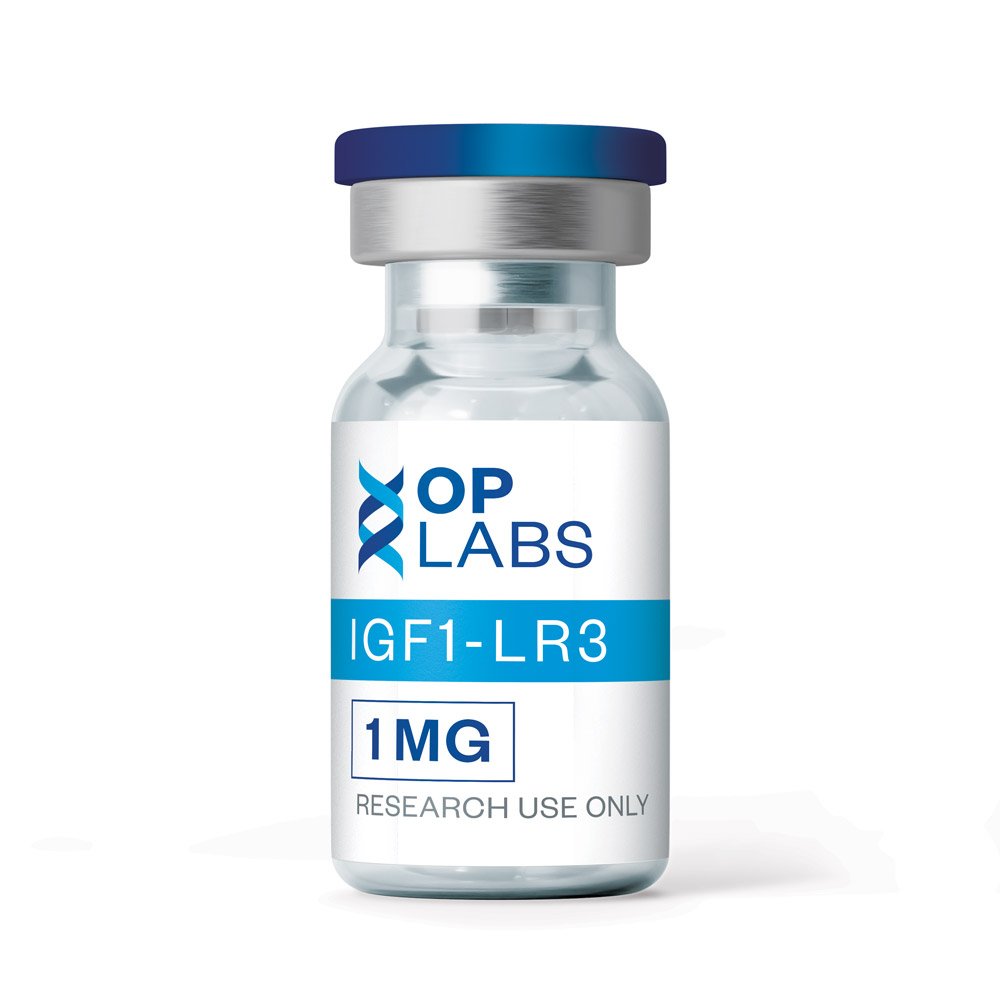
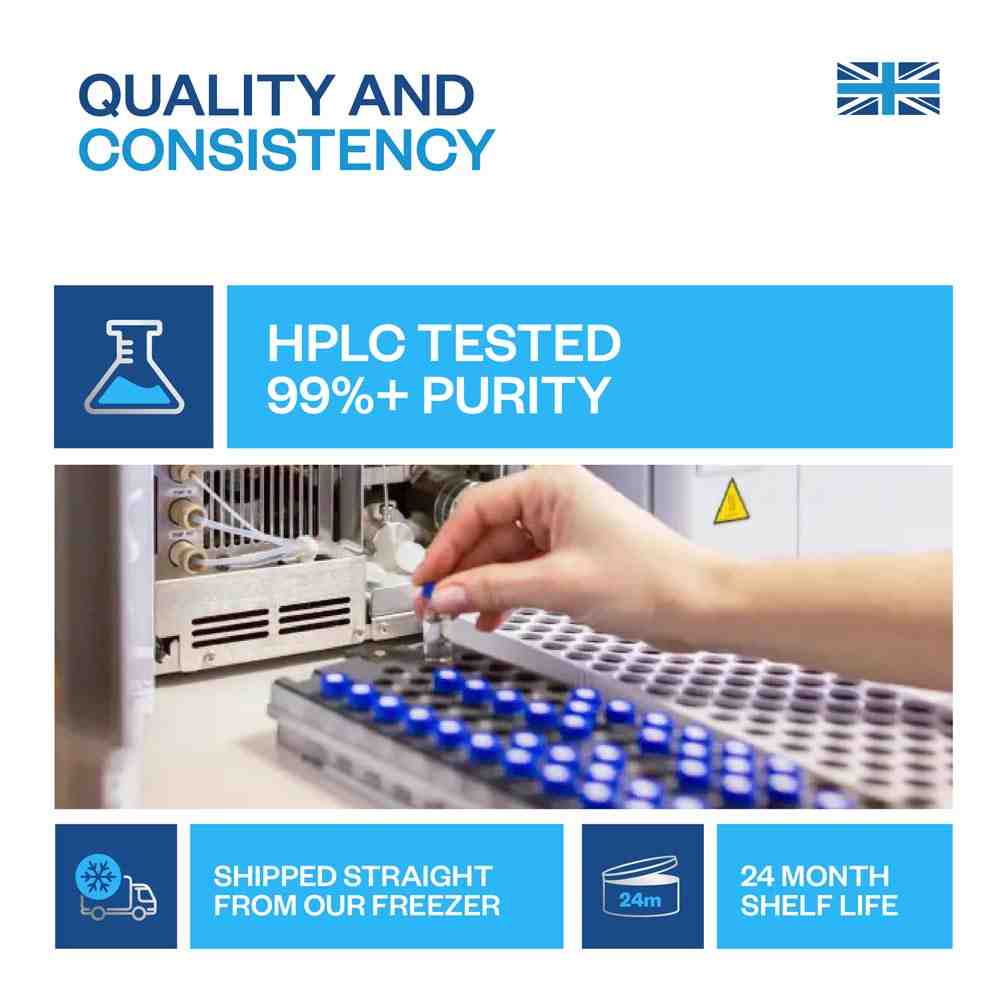
- Batch HPLC tested at 99%+ purity
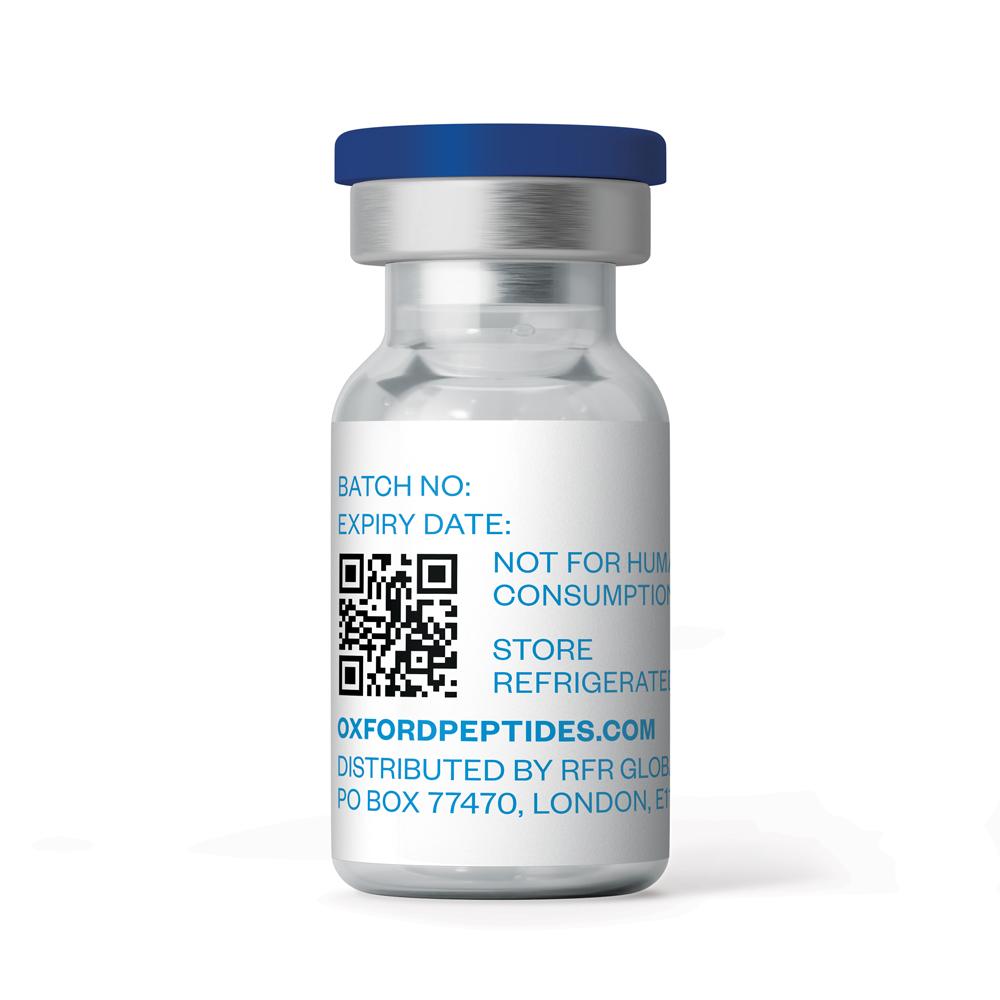
- Store frozen long term or in fridge when ready to be used
- Sold for research purposes only
- Contact us for Wholesale Orders
Download COA here: IGF1_LR3_COA.pdf
Please note: if you have a different Batch ID, please contact us for the latest COA.
IGF-1 LR3
Synonyms / Designations: IGF-1 LR3, Long Arg³ IGF-1, Insulin-Like Growth Factor-1 LR3, Recombinant IGF-1 analogue
CAS Number: 946870-92-4
Molecular Formula: C400H625N111O115S9
Molecular Weight: 9117.5 g/mol
Peptide Classification: Synthetic analogue of insulin-like growth factor-1 (IGF-1)
Purity: ≥ 99 % (HPLC, typical)
Appearance: White to off-white lyophilised powder
Pack Size: 1 mg (total)
Storage: Desiccated, protected from light, stored at –20 °C
Solubility: Soluble in sterile water and buffered aqueous solutions
Description & Mechanism
IGF-1 LR3 is a synthetic analogue of human insulin-like growth factor-1 (IGF-1) incorporating an arginine substitution at position 3 and an extended N-terminal sequence. These structural modifications reduce affinity for endogenous IGF binding proteins, resulting in altered stability and interaction characteristics in experimental systems compared to native IGF-1.
In biochemical and cellular research models, IGF-1 LR3 interacts with the IGF-1 receptor (IGF-1R), initiating intracellular signalling cascades associated with growth factor–mediated pathways. Research studies commonly examine receptor binding behaviour, downstream signalling kinetics, and comparative responses relative to native IGF-1. Observed molecular effects are dependent on experimental design, concentration, and model system and are used to investigate IGF-1 receptor signalling rather than defined biological or physiological outcomes.
Applications in Research
- As a molecular tool for studying IGF-1 receptor binding and activation dynamics
- Investigation of growth factor–mediated intracellular signalling pathways
- In vitro studies comparing modified and native IGF-1 analogues
- Use as a reference compound in endocrine and peptide signalling research
Handling, Reconstitution & Stability
- Weigh under dry conditions; peptide is hygroscopic
- Reconstitute in sterile water or appropriate buffered aqueous solution depending on assay requirements
- Avoid vigorous agitation during dissolution
- Filter sterilize if required (e.g. 0.22 µm) immediately prior to use
- Aliquot and store reconstituted solutions at –20 °C (or lower) to minimise degradation
- Avoid repeated freeze–thaw cycles
Specifications Summary
| Parameter | Typical Value / Range |
|---|---|
| Purity (HPLC) | ≥ 99 % |
| Appearance | White to off-white lyophilised powder |
| Molecular Weight | ~9117.5 g/mol |
| Peptide Type | Synthetic IGF-1 analogue |
| Solubility | Water, buffered aqueous solutions |
| Storage | –20 °C, desiccated, dark |
| Pack Size | 1 mg |
Precautions & Notes
- Experimental behaviour of IGF-1 LR3 is influenced by receptor expression, concentration, and exposure duration
- Modified IGF-1 analogues may exhibit signalling profiles distinct from native IGF-1
- Buffer composition, pH, and ionic strength may affect peptide stability and assay performance
- Appropriate controls are recommended to distinguish specific from non-specific effects
- Intended strictly for laboratory research use; not for human or veterinary application
References
Francis G.L. et al. Novel recombinant fusion protein analogues of insulin-like growth factor (IGF)-I indicate the relative importance of IGF-binding protein and receptor binding for enhanced biological potency. Journal of Molecular Endocrinology, 1992.
https://pubmed.ncbi.nlm.nih.gov/1378742/
Tomas F.M. et al. Superior potency of infused IGF-I analogues which bind poorly to IGF-binding proteins is maintained when administered by injection. Journal of Endocrinology, 1996.
https://pubmed.ncbi.nlm.nih.gov/8708565/
Ballard F.J. et al. Does IGF-I ever act through the insulin receptor? Cytokine & Growth Factor Reviews, 1996.
https://pubmed.ncbi.nlm.nih.gov/8899293/
Keywords: IGF-1 LR3, Long Arg³ IGF-1, Insulin-Like Growth Factor Analogue, Synthetic Growth Factor