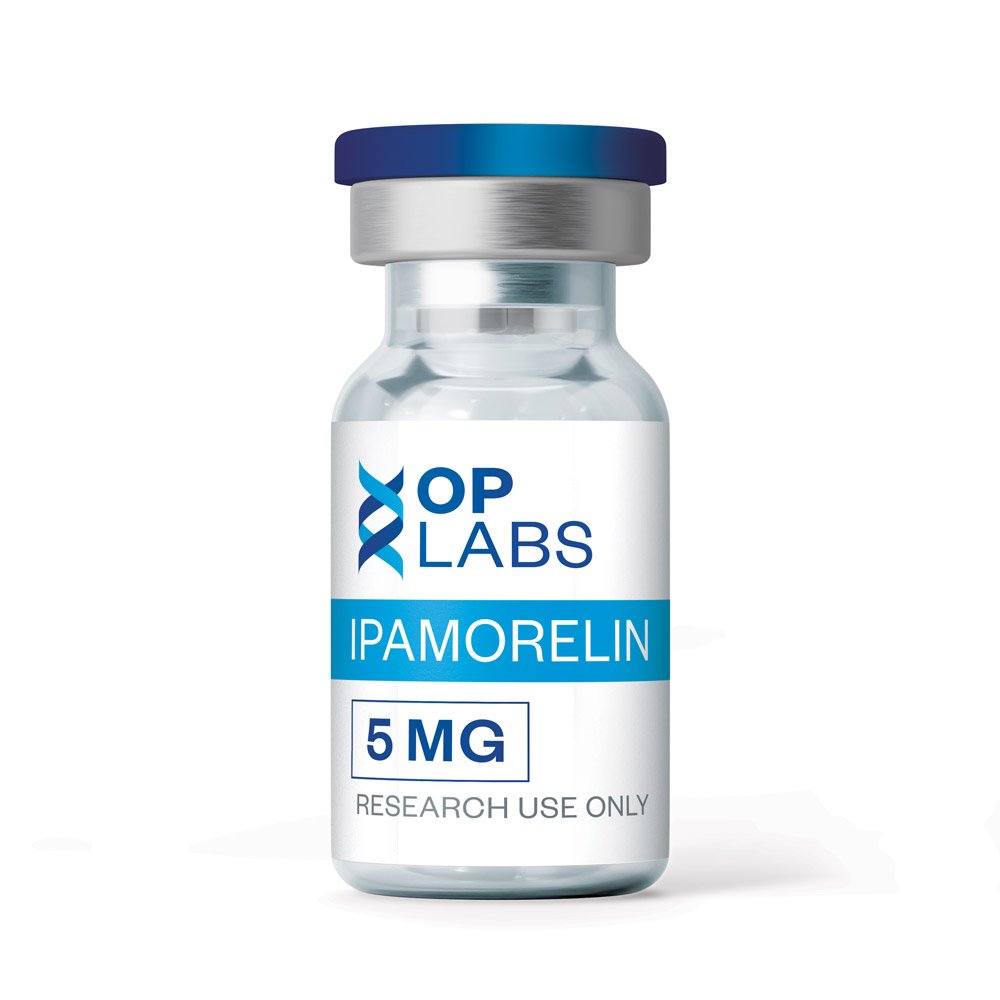
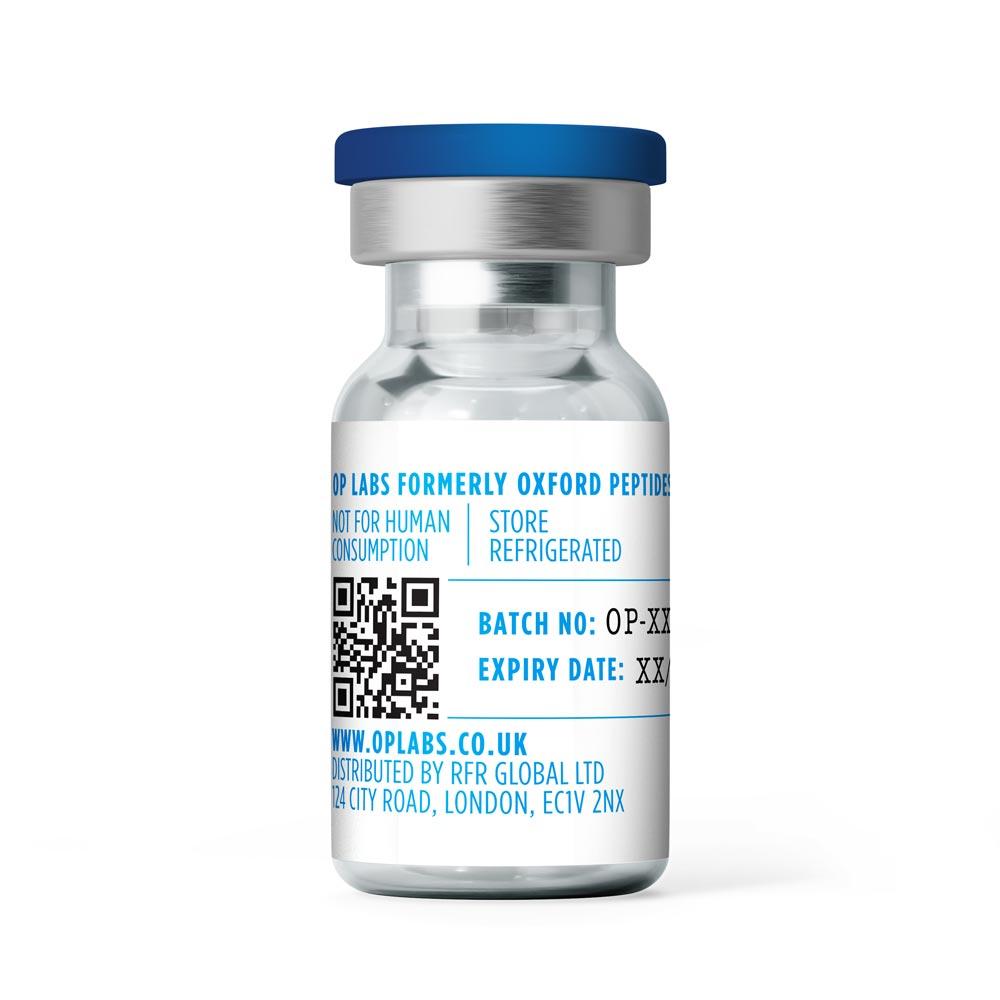


- OP Labs formerly Oxford Peptides
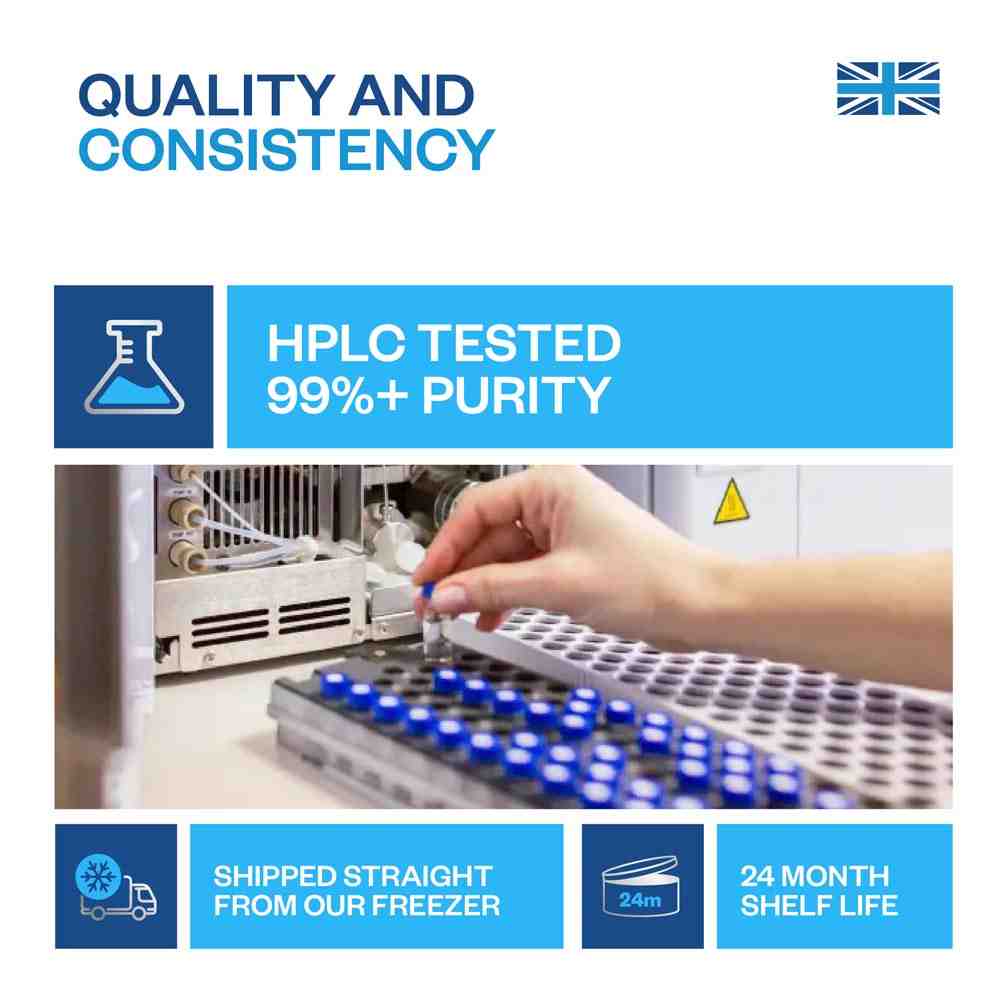
- Batch HPLC tested at 99%+ purity
- Store frozen long term or in fridge when ready to be used
- Sold for research purposes only
- Contact us for Wholesale Orders
Download COA here: Ipamorelin_COA.pdf
Please note: if you have a different Batch ID please contact us for the latest COA.
Ipamorelin
Synonyms / Designations: Ipamorelin, Ipamorelin Acetate, NNC 26-0161, Ipamorelin pentapeptide
CAS Number: 170851-70-4
Molecular Formula: C38H49N9O5
Molecular Weight: ~711.85 g/mol
Peptide Sequence: Aib-His-D-2-Nal-D-Phe-Lys-NH2
Peptide Classification: Synthetic growth hormone secretagogue; selective ghrelin receptor agonist
Purity: ≥ 99 % (HPLC, typical)
Appearance: White to off-white lyophilised powder
Pack Size: 5 mg
Storage: Desiccated, protected from light, stored at –20 °C
Solubility: Soluble in sterile water and buffered aqueous solutions
Description & Mechanism
Ipamorelin is a synthetic pentapeptide growth hormone secretagogue derived from GHRP-1 through structural optimisation. It was the first selective growth hormone-releasing peptide (GHRP) receptor agonist developed, demonstrating selectivity similar to that of growth hormone-releasing hormone (GHRH) for stimulating growth hormone release.
In biochemical and cellular research systems, ipamorelin acts as an agonist at the ghrelin/growth hormone secretagogue receptor (GHSR-1a) expressed on pituitary somatotroph cells. Unlike earlier GHRP compounds such as GHRP-6 and GHRP-2, ipamorelin exhibits a distinct selectivity profile: experimental studies have demonstrated that it does not release adrenocorticotropic hormone (ACTH) or cortisol at growth hormone-stimulating concentrations. This selectivity makes ipamorelin a valuable research tool for investigating GH secretion pathways independently of hypothalamic-pituitary-adrenal (HPA) axis activation. In animal models, ipamorelin has been reported to induce longitudinal bone growth in a dose-dependent manner under controlled experimental conditions.
Applications in Research
- Investigation of GHSR-1a receptor binding, selectivity, and signalling pathways
- Study of growth hormone secretagogue mechanisms independent of HPA axis activation
- Research into pituitary somatotroph function and GH release dynamics
- In vitro and in vivo comparison with other GHRP compounds (GHRP-2, GHRP-6, Hexarelin)
- Models examining GH/IGF-1 axis regulation and bone growth signalling
- Use as a selective reference compound in neuroendocrine and peptide signalling research
Handling, Reconstitution & Stability
- Weigh under dry conditions; peptide is hygroscopic
- Reconstitute in sterile water or appropriate buffered aqueous solution depending on assay requirements
- Avoid vigorous agitation during dissolution
- Filter sterilize if required (e.g. 0.22 µm) immediately prior to use
- Aliquot and store reconstituted solutions at –20 °C (or lower) to minimise degradation
- Avoid repeated freeze–thaw cycles
Specifications Summary
Purity (HPLC): ≥ 99 %
Appearance: White to off-white lyophilised powder
Peptide Type: Synthetic growth hormone secretagogue (GHSR-1a agonist)
Molecular Formula: C38H49N9O5
Molecular Weight: ~711.85 g/mol
Solubility: Water, buffered aqueous solutions
Storage: –20 °C, desiccated, protected from light
Pack Size: 5 mg
Precautions & Notes
- Experimental behaviour of ipamorelin is influenced by receptor expression, concentration, and exposure duration
- Unlike GHRP-6 and GHRP-2, ipamorelin does not stimulate ACTH or cortisol release at GH-stimulating concentrations
- Buffer composition, pH, and ionic strength may affect peptide stability and assay performance
- Appropriate controls are recommended to distinguish receptor-specific from non-specific effects
- Intended strictly for laboratory research use; not for human or veterinary application
References
Raun K. et al. Ipamorelin, the first selective growth hormone secretagogue. European Journal of Endocrinology, 1998.
https://pubmed.ncbi.nlm.nih.gov/9849822/
Sinha D.K. et al. Beyond the androgen receptor: the contribution of growth hormone secretagogues to changes in body composition. Growth Hormone & IGF Research, 2020.
https://pmc.ncbi.nlm.nih.gov/articles/PMC7108996/
Johansen P.B. et al. Ipamorelin, a new growth-hormone-releasing peptide, induces longitudinal bone growth in rats. Growth Hormone & IGF Research, 1999.
https://pubmed.ncbi.nlm.nih.gov/10373343/
Keywords: Ipamorelin, Ipamorelin Acetate, NNC 26-0161, Growth Hormone Secretagogue, GHSR-1a Agonist, Ghrelin Receptor Agonist, Selective GHRP, Synthetic Peptide, Neuroendocrine Research