
- OP Labs formerly Oxford Peptides
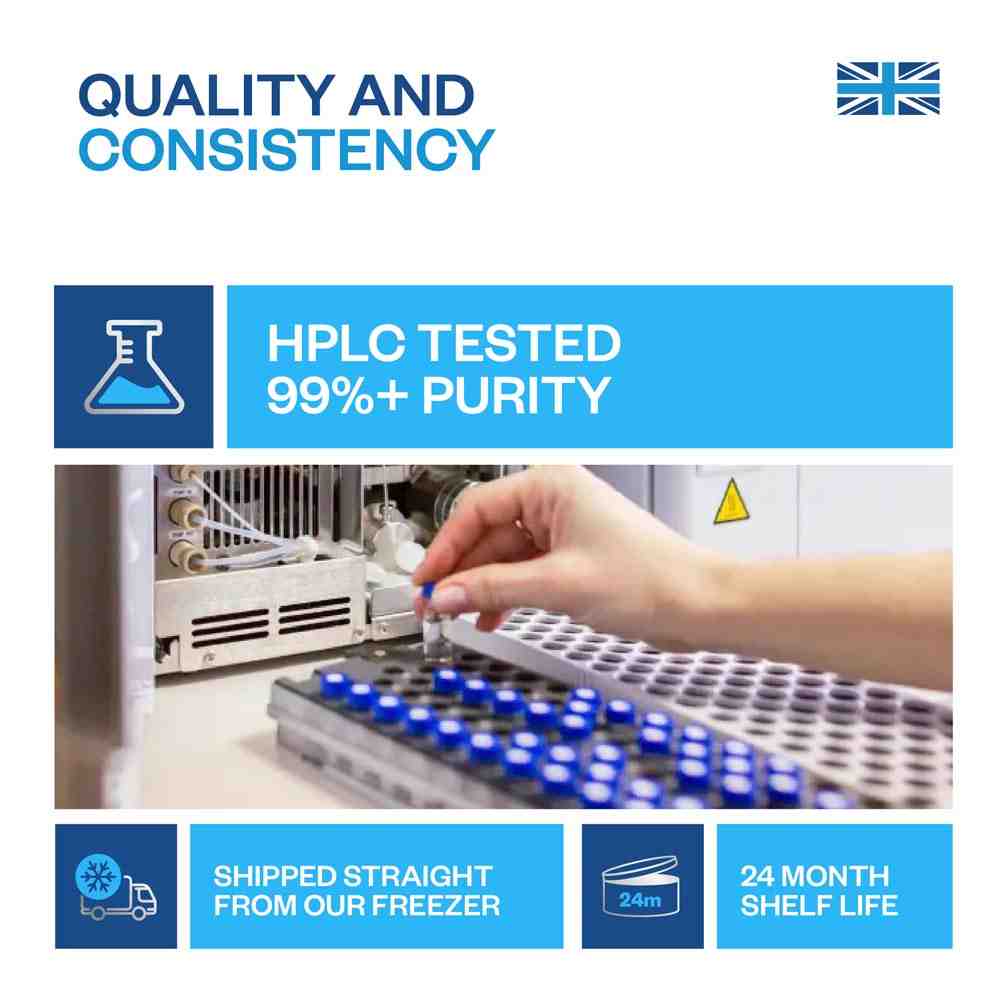
- Batch HPLC tested at 99%+ purity
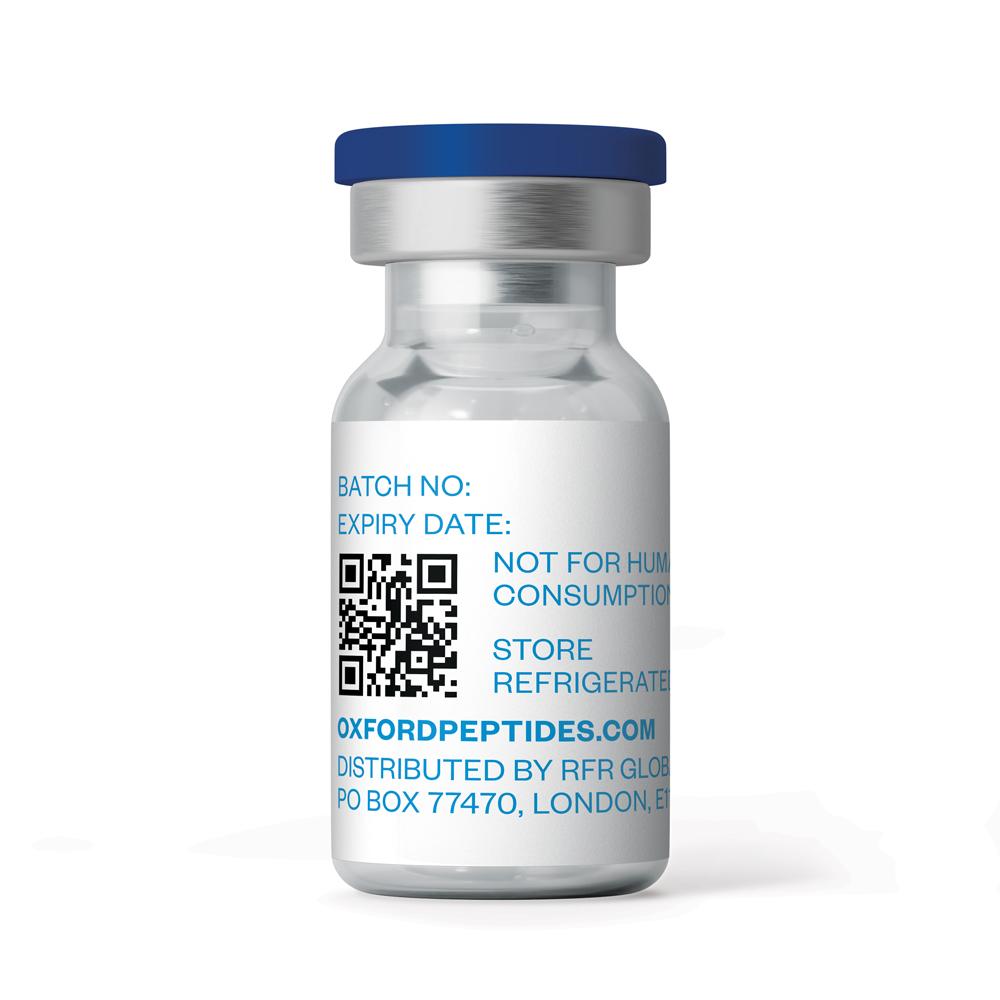
- Store frozen long term or in fridge when ready to be used
- Sold for research purposes only
- Contact us for Wholesale Orders
Download COA here: KPV_COA.pdf
Please note: if you have a different Batch ID, please contact us for the latest COA.
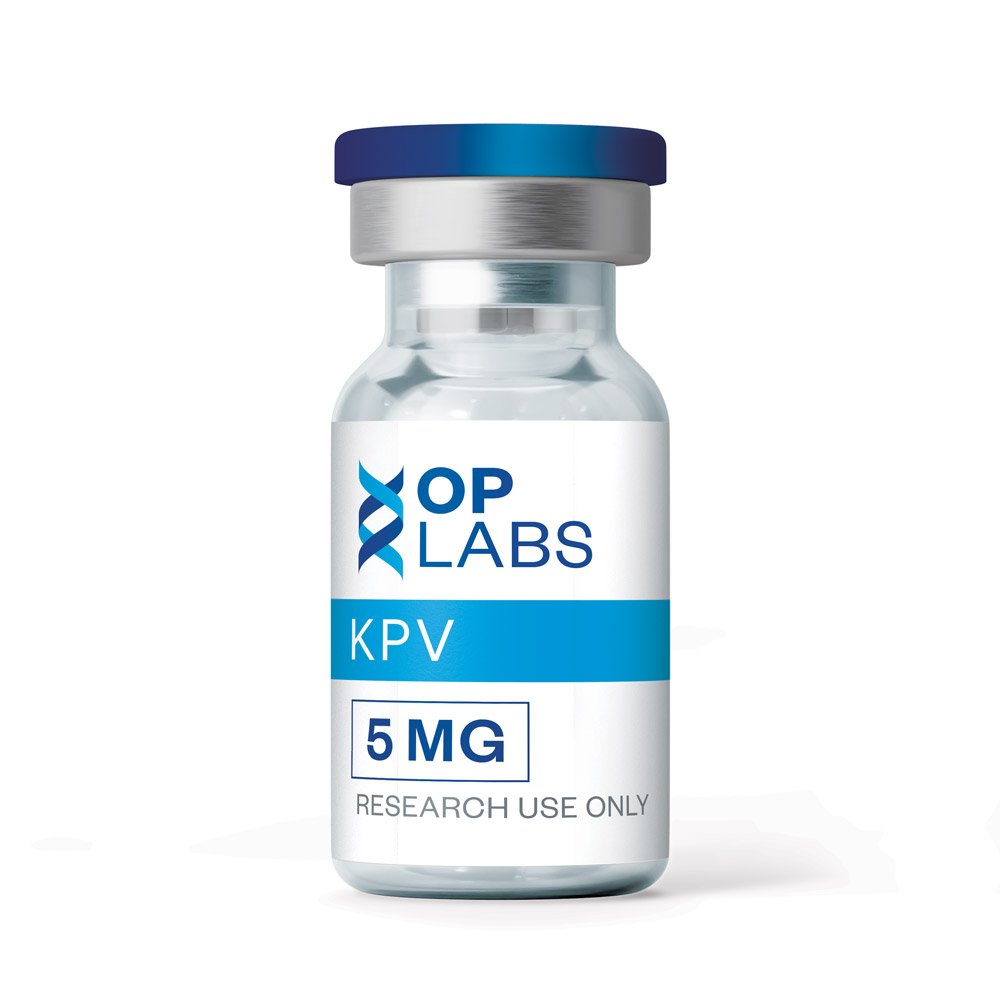
KPV
Synonyms / Designations: KPV, Lys–Pro–Val, α-MSH (11–13), α-Melanocyte-Stimulating Hormone fragment
CAS Number: 67727-97-3
Molecular Formula: C15H26N4O4
Molar Weight: ~342.43 g/mol
Peptide Sequence: Lys–Pro–Val
Peptide Classification: Synthetic tripeptide; α-MSH–derived fragment
Purity: ≥ 99 % (HPLC, typical)
Appearance: White to off-white lyophilised powder
Pack Size: 5 mg (typical)
Storage: Desiccated, protected from light, stored at –20 °C
Solubility: Soluble in sterile water and buffered aqueous solutions
Description & Mechanism
KPV is a synthetic tripeptide corresponding to amino acids 11–13 of α-melanocyte-stimulating hormone (α-MSH). It represents the minimal bioactive fragment commonly utilised in research settings to investigate melanocortin-associated signalling independently of the full-length peptide.
In biochemical and cellular research systems, KPV has been studied for its interactions with melanocortin-related pathways and downstream intracellular signalling mechanisms associated with immune modulation and inflammatory responses. Experimental studies typically examine receptor-independent and receptor-associated signalling effects, transcriptional responses, and peptide stability under controlled conditions. Observed molecular responses are dependent on experimental design, concentration, and model system, and are used to explore peptide-mediated signalling rather than defined biological or physiological outcomes.
Applications in Research
- As a molecular probe for studying melanocortin-related signalling pathways
- Investigation of peptide-mediated modulation of inflammatory and immune-associated cellular responses
- In vitro studies examining short peptide signalling and stability
- Use as a reference compound in melanocortin and α-MSH fragment research
Handling, Reconstitution & Stability
- Weigh under dry conditions; peptide is hygroscopic
- Reconstitute in sterile water or appropriate buffered aqueous solution depending on assay requirements
- Avoid vigorous agitation during dissolution
- Filter sterilize if required (e.g. 0.22 µm) immediately prior to use
- Aliquot and store reconstituted solutions at –20 °C (or lower)
- Avoid repeated freeze–thaw cycles
Specifications Summary
Purity: ≥ 99 %
Appearance: White to off-white lyophilised powder
Peptide Type: Synthetic α-MSH–derived tripeptide
Molar Weight: ~342.43 g/mol
Solubility: Water, buffered aqueous solutions
Storage: –20 °C, desiccated, protected from light
Pack Size: 5 mg
Precautions & Notes
- Experimental behaviour of KPV is influenced by concentration, exposure duration, and experimental model
- Short peptide fragments may exhibit signalling profiles distinct from parent hormones
- Buffer composition, pH, and ionic strength may affect peptide stability and assay performance
- Appropriate controls are recommended to distinguish specific from non-specific effects
- Intended strictly for laboratory research use; not for human or veterinary application
References
Catania A. et al. The neuroimmunomodulatory role of melanocortins. Endocrine Reviews, 2004.
https://pubmed.ncbi.nlm.nih.gov/15082519/
Lipton J.M., Catania A. Anti-inflammatory actions of the neuroimmunomodulator α-MSH. Immunology Today, 1997.
https://pubmed.ncbi.nlm.nih.gov/9368769/
Brzoska T. et al. α-MSH peptides and their receptors: biological functions. Journal of Endocrinology, 2008.
https://pubmed.ncbi.nlm.nih.gov/18334621/
Schiller P.W. et al. Structure–activity relationships of melanocortin peptides and fragments. Annals of the New York Academy of Sciences.
https://pubmed.ncbi.nlm.nih.gov/9463824/
Getting S.J. et al. The melanocortin peptide KPV inhibits inflammatory signalling pathways independently of classical melanocortin receptors. Journal of Immunology.
https://pubmed.ncbi.nlm.nih.gov/12421969/
Patel H.B. et al. Anti-inflammatory effects of melanocortin peptides and minimal active fragments. British Journal of Pharmacology.
https://pubmed.ncbi.nlm.nih.gov/16783407/
PubChem. Lys–Pro–Val (KPV) peptide compound summary.
https://pubchem.ncbi.nlm.nih.gov/compound/Lys-Pro-Val
Keywords: KPV, Lys–Pro–Val, α-MSH Fragment, Melanocortin Peptide, Synthetic Tripeptide, Peptide Signalling Research